The Get-Good-Fast Mistake: Daniel Donato on Practicing for the Long Game
PodcastThe Question Every Guitarist Asks
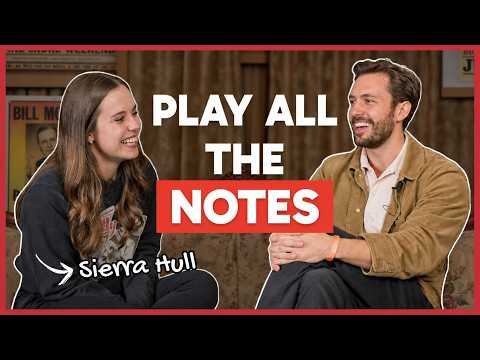
When we sat down with Daniel Donato at the Masters of the Telecaster camp in Big Indian, New York, we put the most common question from our viewers to him: how do I get really good, really fast? Daniel leads Cosmic Country, has headlined the Ryman, and played honky-tonk on Broadway every week starting at age 14. He laughed at the question, then answered it with one of his own.
My question would be why do you want it to be fast?
That isn't a dodge. Daniel points out that the players with a truly personal voice on the instrument, people like Redd Volkaert and Brent Mason, got there by improving a little at a time for decades. If you rush, you'll probably end up somewhere different from where they are. So before you think about speed, you need to know what you're actually aiming for.
Step One: Define What Good Means
Daniel thinks really good is a weak goal because it's too vague. You can't measure it, so you can't move toward it. His fix is to turn the goal into a number.
Try to find a tempo on your metronome that you can't hit yet. Quantify it so it's not just abstract and really good. It's a quantified, attainable state.
That one change matters a lot. A goal like playing the B section of a tune cleanly at 160 bpm, when you can only manage 140 today, tells you exactly what to practice and when you've succeeded. It also makes fast relative to you. As host Spencer Handley put it during the conversation, fast is just wherever you start getting sloppy or inarticulate. That point is different for every player, and it's the only one you need to care about.
The 1% Rule
Once the target is set, Daniel tries to get 1% better each day. He admits that gets harder the better you get, because advanced players improve in smaller steps. Still, the idea works for anyone. Small daily gains add up, and comparing yourself to yesterday is a test you can actually pass.
The only person you really can compare yourself to in any enduring sense that's worthwhile is yourself.
Living in the Zone of Proximal Development
Daniel kept coming back to a term from educational psychology: the zone of proximal development. Psychologist Lev Vygotsky came up with it to describe the space between what a learner can already do alone and what they can't do yet. For guitarists, that's material just beyond your current ability. It's hard enough to stretch you, but not so hard that you can't make progress.
He compares it to strength training, where muscle has to break down before it grows. At the end of our session he showed us what that looks like by playing Chet Atkins' arrangement of Mr. Sandman, the piece he's working on right now. He practices it in focused 20-minute sessions. On camera his hand got tense and he was still remembering some of the chord changes. He called the performance not his best, and he was glad to share it anyway.
It helps to see that. A player at Daniel's level still spends his practice time on material he can't play yet. If your practice feels a little uncomfortable, that's usually a sign you're working on the right things.
The Vocabulary: What Daniel Learned From Johnny Hiland
Daniel studied with Johnny Hiland for about two years as a teenager. One of the first things Hiland taught him is still his warm-up before every Cosmic Country show: harmonized major scales played as double stops.
The Double Stop Warm-Up
- Vertical first: Play the A major scale (A B C# D E F# G# A) in one position across several strings.
- Then horizontal: Play the same notes along a single string, moving up the neck.
- Harmonize it: Add a second note above each scale tone so every step becomes a double stop. Diatonic thirds and sixths are the classic country choices.
- Go Mixolydian: Flatten the seventh (G instead of G#) for the honky-tonk version that fits over a dominant chord.
- Add chromaticism: Slip in passing tones between the harmonized pairs, descend, then repeat on other string sets.
Daniel calls it an all-in-one supplement because it covers scale knowledge, fretboard geometry, harmony, and right-hand technique in a single exercise.
Sounding Like Yourself
Daniel says the biggest lesson from Hiland was something Johnny never meant to teach him. Hiland kept a spare room packed with what Daniel guesses was more than 100 guitars. Whether he plugged in a single-coil Tele or his humbucker-loaded PRS signature, he still sounded like Johnny Hiland. Daniel took that to mean your voice comes from your hands and your intentions, not from your gear. You'll sound like you whatever you play, so you might as well accept that and build on it.
Brent Mason's Substitutions on Sugarfoot Rag
Daniel calls Brent Mason's version of the Hank Garland tune Sugarfoot Rag everything you ever need to learn. Mason carries on an old Nashville tradition, going back to session players like Garland and Grady Martin, of fitting rich harmonic ideas into simple songs.
The idea Daniel showed us is triad superimposition. Over an A7 swing groove, Mason switches between two triad shapes:
- A6 (or F#m): F#, A, and C# give you the root, third, and sixth of A.
- Em: E, G, and B sit on top of A7 as the 5th, b7, and 9th, which gives you a smooth Mixolydian sound.
Switching between those two shapes, with some pentatonic phrases to get in and out, is enough to make a plain dominant vamp sound sophisticated. Daniel says you need solid triad knowledge to do this in real time, so learn your triads in every inversion on every string set.
He also played a classic I-VI-II-V turnaround in A (A7, F#7, B7, E7) using the same dominant shape moved around the neck, then showed a Mason-style line that runs through all four chords. Learning to voice-lead through that progression will take you a long way in country, swing, and jazz.
Getting Pedal Steel and Lap Steel Sounds on a Telecaster
Daniel picked up a lot of steel-guitar ideas at Robert's Western World. He describes the room as an important place in steel history, because it connects to the Sho-Bud operation run by Shot Jackson and Buddy Emmons. A few takeaways:
- Bend into triads: In E, fret the sixth (C#) and bend it up into a triad shape so it resolves like a seventh chord moving to the one chord.
- Move one voice, hold the others: A pedal steel can keep two notes ringing while a pedal raises a third. On guitar, pick three notes and bend only one of them.
- Try lap steel too: Daniel likes the sweet, Hawaiian-flavored C6 sound of players like Don Helms as well as the more obvious pedal steel moves.
- Use pick position: Picking close to the bridge gives you a percussive, James Burton-style snap. Moving toward the neck can get you near Ralph Mooney territory. Tom Brumley-style licks make great endings for bluegrass tunes.
Pickup choice counts too. Daniel remembers Don Kelley reaching over during a blues solo and flipping Daniel's pickup selector from the bridge to the neck. Good tone is part of serving the song.
Explore vs. Exploit: How Daniel Improvises
When asked how much of his soloing is truly improvised and how much is learned material, Daniel borrowed a pair of terms from decision theory: explore and exploit. Exploiting means using what you already know. Exploring means reaching into the unknown. He does both at once.
He pointed to a painting behind us to explain. The artwork is a complex mandala, but the frame is a plain rectangle, and the art needs that frame. In the same way, scales and triads are the fixed frame that makes creative risks possible. Daniel sees this in how he plays: he can steer into a tricky spot because he trusts his vocabulary to get him out.
Perfection vs. Intention
Daniel also cautions against perfectionism. He points to B.B. King's Live at the Regal. B.B.'s technique wasn't flawless, and Daniel bets there was some 60-cycle hum in the amp. But the intention in that playing still moves him. To Daniel, every musician is perfecting rather than perfect, and accepting that is a kind of humility that keeps you growing.
Your Practice Takeaways
- Replace really good with a specific, measurable target, like a tempo you can't hit yet.
- Aim for small daily improvements and measure yourself only against yesterday's version of you.
- Spend focused blocks, around 20 minutes, on material that's just beyond your current ability.
- Warm up with harmonized major and Mixolydian double stops, then add chromatic passing tones.
- Learn triads well enough to superimpose them, starting with Em and F#m over A7.
- Treat scales and triads as the frame, then explore freely inside it.
- Put intention first. Your sound comes from you, not your gear.
If you feel stuck and can't tell what's in the way, a free Sonora Skills Assessment can help you pick your next measurable goal and build a practice plan around it.
Continue exploring
Insights from our community of musicians, mentors, and students.